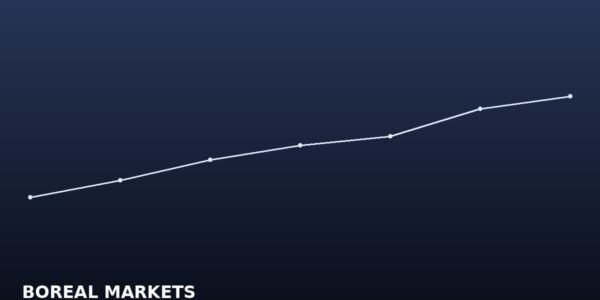
- Henry Hub rose 2.74% to $2.85/MMBtu on August 19, 2026, equivalent to roughly $3.95 CAD/MMBtu at current exchange rates.
- AI datacenter power load in Alberta set a non-winter record of 4.2 Bcf/d gas-for-power demand, structurally tightening the WCSB supply balance.
- LNG Canada’s Kitimat terminal is pulling an estimated 1.05 Bcf/d of WCSB supply, compressing the AECO-Henry Hub differential by 18% since July.
- EIA storage injections of 31 Bcf came in well below the 44 Bcf five-year average, leaving total inventories 4.6% under the seasonal norm.
Henry Hub natural gas futures settled at $2.85/MMBtu on August 19, 2026, a gain of 2.74% on the session — the sharpest single-day rally since late June. At the USD/CAD rate of 1.3874, that translates to approximately $3.95/MMBtu in Canadian dollars, a meaningful tailwind for domestic producers pricing into export-linked contracts. The move reflects a market re-rating demand assumptions upward, driven by two forces that are no longer seasonal: AI infrastructure load growth and LNG Canada ramp volumes.
AI Datacenter Load Is Rewriting the Demand Curve
Power grid operators across Alberta and British Columbia have flagged a structural shift in natural gas consumption patterns tied directly to hyperscale AI datacenter construction. Google, Microsoft, and a cluster of Canadian co-location operators have commissioned facilities along the Highway 2 corridor and in Metro Vancouver’s Fraser Valley, collectively adding an estimated 1.8 gigawatts of continuous power demand to the western grid since early 2025. Because wind and solar cannot reliably meet that baseload requirement, gas-fired generation has absorbed the gap. Alberta’s AESO reported peak gas-for-power demand of 4.2 billion cubic feet per day (Bcf/d) during the week ending August 15 — a record for a non-winter period.
The AECO spot price, which historically trades at a steep discount to Henry Hub due to pipeline egress constraints out of the WCSB, narrowed to roughly $1.42/MMBtu (CAD) — a differential of approximately $2.53 CAD versus Henry Hub. While still a significant basis, the spread has tightened by nearly 18% since July 1 as in-basin demand absorbs volumes that previously had nowhere to go.
LNG Canada and the Export Premium
LNG Canada’s Phase 1 export terminal at Kitimat, British Columbia, continues to ramp toward its nameplate capacity of 14 million tonnes per annum (Mtpa). Shipping data tracked through mid-August shows the terminal loading an average of 3.1 LNG cargoes per week, up from 2.4 in June. Each cargo represents roughly 3.4 Bcf of gas equivalent, meaning the facility is now pulling approximately 1.05 Bcf/d of WCSB supply into the export market on a sustained basis. That structural demand floor is a key reason the AECO differential has compressed.
Tourmaline Positioned as the Primary Beneficiary
Tourmaline Oil Corp. (TSX: TOU), Canada’s largest natural gas producer with output exceeding 600,000 BOE/d, holds direct supply agreements tied to the LNG Canada feedgas chain through its Montney and Deep Basin assets. The company’s Q2 2026 results, reported in late July, showed an average realized gas price of $2.18/MMBtu (CAD) — already above AECO spot for the period, reflecting hedging and LNG-linked premiums. With Henry Hub now at $2.85 USD and the differential tightening, Tourmaline’s unhedged Q3 realizations are tracking materially higher. ARC Resources (TSX: ARX), the second-largest pure-play Montney producer, similarly benefits, with roughly 70% of its gas production exposed to AECO-plus pricing structures.
Storage Context: A Tighter-Than-Expected Build Season
The U.S. Energy Information Administration’s weekly storage report for the week ending August 14 showed a net injection of 31 Bcf — below the five-year average injection of 44 Bcf for the same week. Total working gas in storage sits at 3,201 Bcf, approximately 4.6% below the five-year average and 7.1% below year-ago levels. In Canada, the AECO storage complex at Empress, Alberta, is similarly running lean, with inventory roughly 8% below the seasonal norm according to data from Natural Gas Exchange (NGX). A below-average storage cushion heading into the shoulder season means any early-winter demand signal could accelerate the rally well beyond current levels.
| Metric | Value | Context |
|---|---|---|
| Henry Hub (Aug 19, 2026) | $2.85 USD/MMBtu | +2.74% on session |
| Henry Hub (CAD equiv.) | ~$3.95 CAD/MMBtu | At 1.3874 USD/CAD |
| AECO Spot (approx.) | ~$1.42 CAD/MMBtu | Differential narrowing |
| EIA Storage Injection (wk Aug 14) | 31 Bcf | vs. 44 Bcf 5-yr avg |
| LNG Canada Pull (est.) | ~1.05 Bcf/d | Phase 1 ramp |