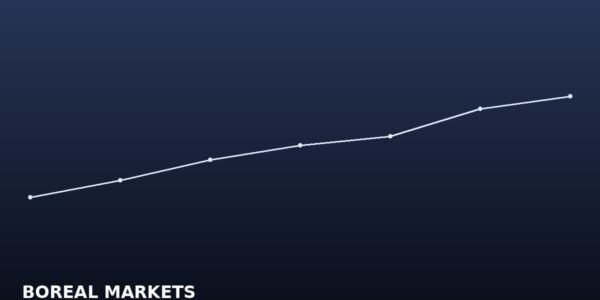
- Henry Hub natural gas rose 1.48% to $2.81/MMBtu on August 12, 2026, equivalent to approximately $3.92/MMBtu in Canadian dollars at current exchange rates.
- LNG Canada’s Phase 1 terminal in Kitimat is absorbing WCSB supply and narrowing the chronic AECO-to-Henry Hub price differential for Alberta producers.
- The EIA estimates AI datacenter power demand will add 3.2 Bcf/d of incremental U.S. natural gas consumption by end-2027, creating a structural, weather-independent demand floor.
- U.S. gas storage surplus has compressed to 4.2% above the five-year average from nearly 10% in spring, supporting further price gains ahead of winter heating season.
Natural gas at Henry Hub gained 1.48% to $2.81/MMBtu on Wednesday, August 12, 2026, extending a summer rally driven by a convergence of structural demand forces that analysts say look less seasonal and more permanent than in prior years. At the prevailing USD/CAD exchange rate of 1.3938, that translates to approximately $3.92/MMBtu in Canadian dollars — a price level that materially improves netbacks for Canadian producers selling into the U.S. Gulf Coast market.
AECO Basis Remains Under Pressure, But LNG Canada Is Changing the Math
The AECO spot price — Canada’s benchmark for Alberta-produced natural gas — has historically traded at a significant discount to Henry Hub, reflecting pipeline takeaway constraints and landlocked supply. That differential has narrowed modestly in recent weeks as LNG Canada’s Phase 1 export terminal in Kitimat, B.C., continues to ramp toward its nameplate capacity of 14 million tonnes per annum (Mtpa). By diverting Western Canadian Sedimentary Basin (WCSB) molecules to Pacific Basin buyers — primarily in Japan, South Korea, and China — LNG Canada is absorbing supply that would otherwise pressure AECO pricing. Calgary-based Tourmaline Oil Corp. (TSX: TOU), Canada’s largest natural gas producer with output exceeding 600,000 BOE/d, holds a strategic equity stake in LNG Canada and has long-term offtake arrangements that insulate a portion of its production from AECO weakness.
AI Datacenters: The Demand Driver Reshaping the Gas Curve
The most structurally significant demand narrative of 2026 is the explosion in power consumption tied to artificial intelligence infrastructure. North American hyperscalers — including Microsoft, Google, and Amazon — are commissioning gas-fired peaker and baseload generation capacity at a pace not seen since the mid-2000s build-out, as grid operators struggle to deliver reliable, dispatchable power to facilities running GPU clusters around the clock. The U.S. Energy Information Administration (EIA) estimated in its July 2026 Short-Term Energy Outlook that AI-linked power generation demand would add an incremental 3.2 billion cubic feet per day (Bcf/d) of natural gas consumption by end-2027 — equivalent to roughly 3% of current U.S. total demand. This load is non-cyclical and weather-independent, giving gas producers a demand floor that did not exist five years ago.
Storage Surplus Narrows, Offering Price Support
The latest EIA weekly storage report showed U.S. working gas in storage at 2,981 Bcf for the week ending August 7, 2026 — sitting approximately 4.2% above the five-year seasonal average, down from a surplus of nearly 10% earlier in the spring injection season. The compression of that surplus reflects stronger-than-expected power burn and the early drawdown effect of LNG feedgas demand. If the storage overhang continues to narrow at the current pace, many desks are pencilling in a return to five-year-average territory before the November heating season begins, which would be constructive for front-month Henry Hub prices.
| Metric | Value | Note |
|---|---|---|
| Henry Hub (Aug 12, 2026) | $2.81/MMBtu USD | +1.48% day-over-day |
| Henry Hub (CAD equivalent) | ~$3.92/MMBtu CAD | At 1.3938 USD/CAD |
| EIA Storage (week of Aug 7) | 2,981 Bcf | +4.2% vs. 5-yr avg |
| LNG Canada Phase 1 Capacity | 14 Mtpa | Kitimat, B.C. |
| AI Gas Demand Increment (EIA est.) | 3.2 Bcf/d | By end-2027 |
Tourmaline Well-Placed as Multiple Tailwinds Converge
For Tourmaline, the confluence of a firming Henry Hub, a structurally tightening AECO basis, and LNG Canada offtake creates a rare environment where the company’s scale becomes a direct earnings lever. Tourmaline’s diversified marketing portfolio — spanning AECO, Dawn, Malin, and Gulf Coast pricing points — allows it to dynamically allocate volumes to the highest netback market in real time. With a low sustaining capital requirement and a track record of returning excess cash to shareholders via special dividends, Tourmaline remains the highest-conviction large-cap name for Canadian retail and institutional investors seeking natural gas exposure heading into the 2026–27 winter demand season.